
Border towns are among the most fascinating places in the world. Positioned between nations, languages, traditions, and histories, these towns often become vibrant cultural crossroads where identities blend in remarkable ways. From food and architecture to music and daily life, border communities reveal how geography can shape culture in unexpected and beautiful forms.
While borders are often associated with political division, many border towns demonstrate the opposite — connection, exchange, and coexistence. Here are some of the world’s most unique border towns where two cultures collide and create something entirely their own.
Tijuana, Mexico & San Diego, USA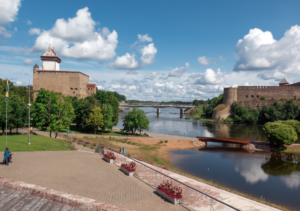
Few border regions are as globally recognized as the area connecting Tijuana and San Diego. Separated by the United States–Mexico border, the two cities form one of the busiest international crossings in the world.
Tijuana has evolved into a dynamic cultural hub known for:
- Baja-style cuisine
- Contemporary art galleries
- Craft breweries
- Street markets
- Music and nightlife
Meanwhile, San Diego reflects Southern California’s coastal lifestyle and multicultural identity.
The border region has produced a unique fusion culture visible in food, language, fashion, and art. Cross-border influences have helped popularize dishes such as Baja fish tacos and shaped a vibrant bilingual community.
Despite political tensions surrounding immigration and border policy, the region remains deeply interconnected economically and culturally.
Gorizia, Italy & Nova Gorica, Slovenia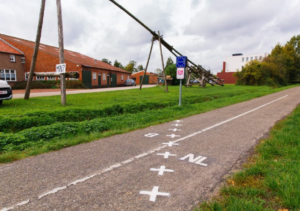
Once divided by Cold War tensions, the neighboring towns of Gorizia in Italy and Nova Gorica in Slovenia now symbolize European unity.
For decades, a hard border separated these communities after World War II. Today, travelers can walk freely between the two towns thanks to the Schengen Agreement.
The area combines:
- Italian cafés and architecture
- Slovenian traditions and cuisine
- Shared public spaces
- Cross-border festivals
- Multilingual communities
In 2025, the two cities were jointly named a European Capital of Culture, highlighting their transformation from divided border towns into symbols of cooperation and shared identity.
El Paso, USA & Ciudad Juárez, Mexico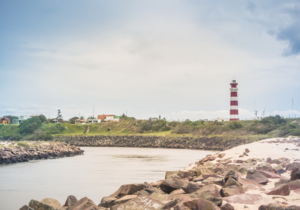
Located along the Rio Grande, El Paso and Ciudad Juárez represent one of North America’s most culturally intertwined border regions.
The cities share:
- Family connections across borders
- Bilingual communities
- Shared musical traditions
- Mexican-American cuisine
- Economic interdependence
El Paso is often described as one of the most Hispanic-influenced cities in the United States, while Juárez remains a major industrial and cultural center in northern Mexico.
The region demonstrates how border communities often develop hybrid identities that transcend national boundaries.
Tangier, Morocco
Although not directly split by a land border, Tangier sits at the meeting point of Europe and Africa across the Strait of Gibraltar. For centuries, the city has served as a gateway between Moroccan, Spanish, French, and international influences.
Tangier’s atmosphere reflects a blend of:
- Moroccan markets
- European architecture
- Mediterranean cuisine
- Arabic and French languages
- Artistic and literary history
The city has long attracted writers, artists, and travelers fascinated by its multicultural identity and strategic geographic location.
Baarle-Hertog, Belgium & Baarle-Nassau, Netherlands
One of the world’s strangest border towns can be found between Belgium and the Netherlands. Baarle-Hertog and Baarle-Nassau feature an incredibly complex border arrangement where enclaves of Belgian territory exist inside the Netherlands and vice versa.
In some cases:
- Borders run through homes and shops
- Front doors determine national identity
- Restaurants operate across two countries
- Sidewalk markers indicate border lines
The town has become a tourist attraction because of its unusual geography and peaceful coexistence between two cultures.
Residents have adapted to this unique arrangement with remarkable practicality and cooperation.
Narva, Estonia & Ivangorod, Russia
Narva and Ivangorod sit directly opposite each other across the Narva River, representing a cultural and political meeting point between Europe and Russia.
Narva belongs to Estonia and the European Union, while Ivangorod lies within Russia. The two towns share centuries of intertwined history yet now symbolize different geopolitical worlds.
The region reflects contrasts between:
- European and Russian governance
- Estonian and Russian language communities
- Western and Eastern cultural influences
Narva’s large Russian-speaking population creates a unique cultural identity shaped by both Estonian and Russian traditions.
Shenzhen, China & Hong Kong
The border between Shenzhen and Hong Kong represents one of the most dramatic economic and cultural contrasts in modern Asia.
Once a small fishing village, Shenzhen transformed into a global technology and manufacturing powerhouse after China’s economic reforms. Hong Kong, meanwhile, developed under British colonial influence and remains an international financial center.
The region blends:
- Cantonese culture
- Chinese and British influences
- Modern skyscrapers
- Technology innovation
- International business culture
Travelers crossing between the two experience noticeable differences in language, legal systems, architecture, and social environments despite their close geographic proximity.
Görlitz, Germany & Zgorzelec, Poland
Split by the Neisse River after World War II, Görlitz and Zgorzelec now function as connected twin towns between Germany and Poland.
The area showcases:
- German historic architecture
- Polish cultural traditions
- Shared festivals and events
- Cross-border commerce
- Multilingual communities
The reopening of bridges and easier European border movement helped reunite communities that had once been divided by postwar borders.
Today, the towns serve as examples of reconciliation and cultural integration within Europe.
The Cultural Importance of Border Towns
Border towns often develop identities that differ from the rest of their countries. Because they serve as meeting points between cultures, these communities frequently become centers of:
- Multilingualism
- Culinary fusion
- Trade and commerce
- Artistic exchange
- Cultural adaptation
- Hybrid traditions
Rather than existing purely within one national identity, many border towns create entirely new regional cultures influenced by both sides.
This blending can be seen in architecture, festivals, cuisine, dialects, and even local humor.
Challenges Border Communities Face
Despite their cultural richness, border towns also face unique challenges, including:
- Political tensions
- Immigration restrictions
- Economic inequality
- Security concerns
- Identity conflicts
- Infrastructure differences
Changes in border policy can significantly affect daily life for residents who rely on cross-border movement for work, family, and commerce.
At the same time, many border communities demonstrate resilience and adaptability in response to political and economic shifts.
Why Travelers Are Drawn to Border Towns
Travelers are increasingly attracted to border towns because they offer experiences that feel culturally layered and authentic.
Visitors often enjoy:
- Experiencing two cultures in one trip
- Unique local cuisines
- Bilingual atmospheres
- Historical significance
- Diverse architecture
- Cultural festivals
Border towns reveal how cultures interact in real time, creating environments that are often more dynamic and nuanced than national stereotypes suggest.
Conclusion
Border towns are among the world’s most culturally fascinating destinations because they exist at the intersection of nations, traditions, and identities. Whether in Europe, Asia, Africa, or the Americas, these communities demonstrate how borders can create not only division but also connection and cultural creativity.